People talk about "hiking Vesuvius" like it's some kind of mountaineering expedition. I understand the instinct — it's a volcano, it's 1,281 metres high, it destroyed Pompeii. Your brain assumes it'll be hard. In reality, the walk from the car park to the crater rim takes about 25 minutes on a paved gravel path. My grandmother could do it, and she complains about stairs.
I've been up Vesuvius three times. Twice with visiting friends, once alone on a Tuesday in November when there was nobody else there and the bay of Naples was so clear I could see Ischia. That solo trip was the best. But even the crowded summer visits were worth it, because looking into the crater of an active volcano is one of those things that hits you somewhere primal.
What's Ahead
Getting There from Naples
There's no public bus that goes all the way to the Vesuvius summit car park, which makes this slightly more logistically annoying than other day trips. Your options:
EAV bus from Ercolano. Take the Circumvesuviana from Napoli Garibaldi to Ercolano Scavi (about 20 minutes, €2.20). From outside the station, the EAV Vesuvio shuttle bus runs up the mountain to the car park. It costs €3.10 each way and runs roughly every 40 minutes. The ride up takes about 30 minutes on a winding road.
Organised shuttle. Several companies run minibuses from Naples or Pompeii directly to the car park. Prices vary — €15-25 per person is typical. More convenient, less interesting.
Taxi or private car. You can take a taxi from Ercolano station to the car park for about €25 each way (negotiate before you get in). Or drive yourself — there's a car park at the summit that costs €6.
| Getting There | Cost | Time from Naples |
|---|---|---|
| Circumvesuviana + EAV bus | ~€10 return | ~1 hour |
| Organised shuttle | €15–25 | ~50 min |
| Taxi from Ercolano | ~€50 return | ~50 min |
| Summit entry ticket | €10 | — |
The Actual Hike

From the car park (elevation about 1,000m), you buy your ticket (€10 per person) and start walking up a wide gravel path that zigzags along the mountain's flank. The path is maintained, there are guardrails in the steeper sections, and guides are stationed along the way.
It takes 20-30 minutes to reach the crater rim, depending on your pace and how often you stop to look behind you — because the views on the way up are extraordinary. The bay of Naples opens up below, Capri sits on the horizon, and the city spreads out like a map. You gain about 280 metres of elevation. It's a walk, not a climb.
The path can be slippery when wet. Volcanic gravel is loose and crumbly. Trainers are fine; sandals are not. I saw a man in leather loafers once. He made it, but he wasn't happy about it.
At the Crater
The crater is about 300 metres wide and 200 metres deep. You walk along the rim for maybe 15-20 minutes, looking down into it. There's a guide up here who gives a short talk — usually in Italian and English — about the geology, the history, and the terrifying fact that this is still classified as an active volcano.
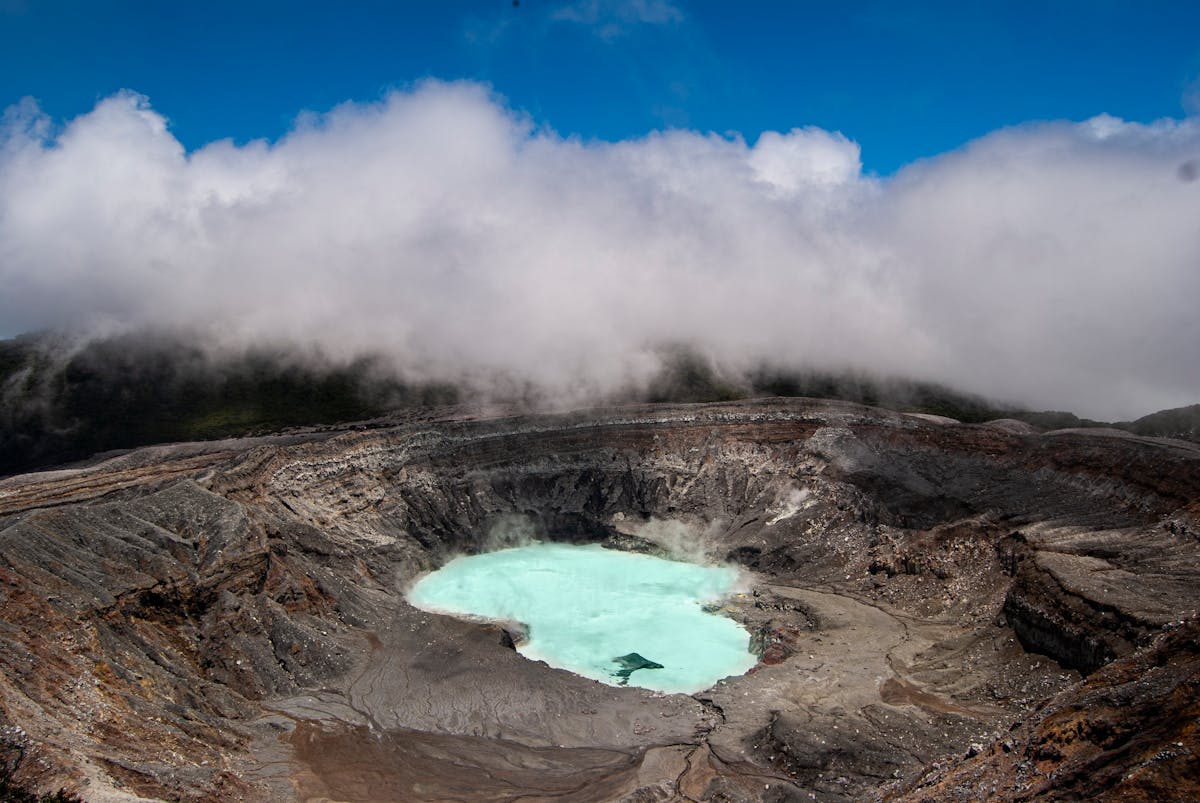
You can see steam vents — fumaroles — on the inner walls, releasing sulphurous gas. The rocks are streaked yellow and red. It smells faintly of rotten eggs. The last eruption was in 1944 — within living memory — and volcanologists monitor it continuously. The evacuation plan for the 600,000 people who live on its slopes is, apparently, "very detailed." I choose to believe them.
Standing on the rim of Vesuvius while looking down at Pompeii in the distance is one of those moments where history becomes physical. The same mountain, the same bay, the same terrible possibility. It's been 2,000 years and nothing has changed except the city grew closer.
Combining with Pompeii
This is possible but exhausting. Both are half-day activities, and doing both in one day means you're spending 8-10 hours in transit and on your feet. If you're determined, the most efficient route is: Circumvesuviana to Ercolano → bus up Vesuvius → bus back down → Circumvesuviana to Pompei Scavi → visit Pompeii → train back to Naples.
Start early (8am departure from Naples). Do Vesuvius first while you're fresh. Have lunch in Ercolano before the afternoon at Pompeii.
My honest advice: Do them on separate days. You'll enjoy both more, and you won't arrive back in Naples at 7pm feeling like you've run a marathon. Vesuvius is a morning trip. Pompeii is a half-day minimum. Combining them turns two great experiences into one mediocre one.
What to Bring and When to Go
Best time: Mornings, especially before 10am. The car park fills up by midday in summer, and the crater rim gets crowded. Weekdays are significantly better than weekends.
Season: Spring (April-May) and autumn (September-October) are ideal. Summer is hot and crowded. Winter is cold at the summit — it can be 10-15°C colder than Naples — but the views are often clearest.
Bring: Water (nothing for sale on the path). Sunscreen. A jacket — even in summer, the summit is windy. Closed shoes. Cash for the ticket if you don't have a card (some ticket windows only take cash).
The whole trip from Naples — train, bus, hike, crater, return — takes about 4-5 hours. That's it. Half a day to stand on top of one of the most famous volcanoes on earth and look down into the thing that buried Pompeii. I keep going back. The view is different every time, and the fundamental weirdness of staring into a volcano never quite wears off.